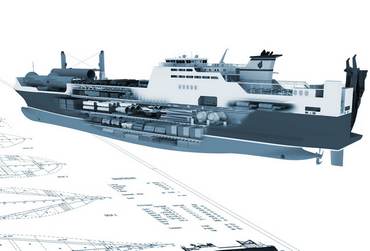
 The scope of design & engineering services for new vessels is divided into the following stages: concept design, tender/contract design, basic design, and coordination/integration of detailed design. Each of the subsequent design stages involves a greater level of detail while taking into consideration the requirements of the client and regulatory bodies.
Additionally, prior to the signing of a vessel construction or refit contract, we offer independent advice covering contract negotiations, review of design specifications, planning and cost evaluation.
 KNUD E. HANSEN has been involved in every stage of the refit process, on a variety of conversion projects including vessel life extensions, lengthening and heightening, capacity changes, space repurposing, regulatory changes, accommodation refurbishment and energy saving projects. Our involvement typically starts at the conceptual phase with feasibility studies and carries right through the design & engineering phase as well as production support and onsite supervision.
Whether pertaining to a new vessel design, refit or conversion project, KNUD E. HANSEN offers a fully tailored and comprehensive solution to your engineering needs by providing the following key services:
Morbi tempor leo nisi, non malesuada nibh aliquam vitae. Nunc laoreet erat nec lacus varius facilisis. Curabitur conse quat hendrerit sapien, vitae viverra quam fermentum nec. Eti am convallis, quam ut finibus varius, turpis risus blandit arcu, et sollicitudin enim diam non neque. Morbi tempor leo nisino malesuada nibh aliquam vitae. Nunc laoreet erat nec lacus varius facilisis. Curabitur consequat hendrerit sapien, vitae vi verra quam fermentum nec.
Etiam convallis, quam ut finibus varius, turpis risus blandit arcu, et sollicitudin enim diam non neque. Curabitur conseq uat hendrerit sapien, vitae viverra quam fermentum nec. Mor bi tempor leo nisino n malesuada nibh aliquam vitae.
Nunc laoreet erat nec lacus varius facilisis. Curabitur conse quat hendrerit sapien, vitae vi verra quam fermentum nec.
Our solutions are tailored exactly to your needs. Our unique approach is based on the free exchange of ideas with our clients, a drive for continual innovation and years of experience encompassing every kind of vessel. Combining these elements, we apply fresh thinking to each new project, tailoring solutions that are both state-of-the-art, practical and that meet the individual needs of our clients.
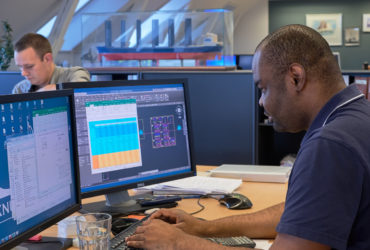
We employ the most up-to-the-minute software and techniques for the development of 2D and 3D designs, FEM and CFD models, advanced structural design and intact and damage stability calculations. We maintain relationships with the world’s leading research institutions in order to facilitate in-depth research and model testing.
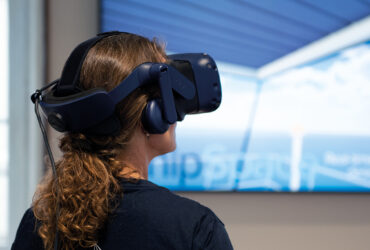
We have developed a completely new technology. This technology – Virtual Reality (VR) Design Verification Tool – makes it possible to take customers on a virtual tour inside new designs before any construction has begun, or first steel is cut.
Our support does not end after design delivery. During a newbuild project, we are able to supervise throughout the entire programme, on behalf of the client. Subsequent to delivery, we are on-hand to review the technical, operational and commercial performance of the vessel and to provide modification and upgrade solutions in line with both client requirements and newly implemented regulations.
The design and engineering of refit & conversion projects is also a core activity at KNUD E. HANSEN, so we are able to give your existing vessels a new lease on life or prepare them for alternative application.
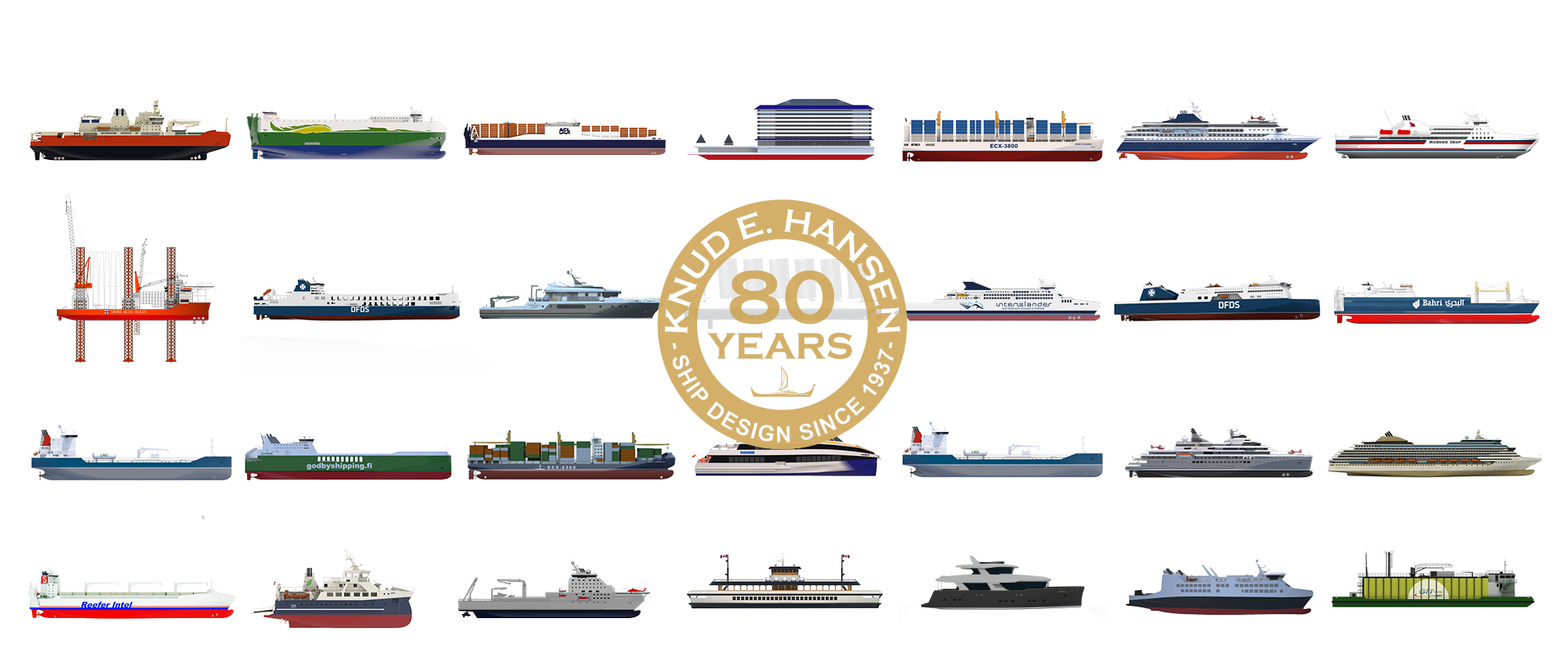
At KNUD E. HANSEN we have sought out the most experienced and qualified maritime designers and engineers from around the globe. The result is an international team accustomed to crossing cultural and linguistic divides as well as bridging the diverse sectors found within the maritime world.
Our capabilities and experience enable us to work with our clients every step of the way, from the earliest stages of concept design, through the tender/contract design and optimised basic design to project management, delivery and beyond. Our combined expertise in design and engineering allows us to deliver energy efficient solutions through the optimisation of every aspect of a newbuild and its systems.
Our research activities are conducted on behalf of a diverse client range across both private and public sectors. The fact that KNUD E. HANSEN has carried out projects in so many segments of the maritime sector, all over the world, gives our research scope the broadest possible reach.
The inventive naval architects, designers and marine engineers at KNUD E. HANSEN are ready to assist you with realising the next generation of vessels that your business will need to compete in the global marketplace.
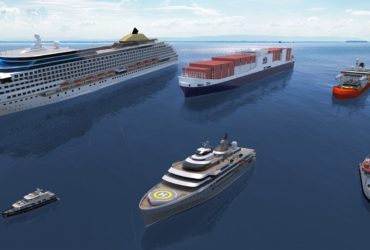
We are a truly global company. Not only is our team made up of people from all over the world, our clients are also distributed worldwide. Many companies like to boast of international credentials, but KNUD E. HANSEN can genuinely say it has fulfilled projects on every continent on Earth.
Morbi tempor leo nisi, non malesuada nibh aliquam vitae. Nunc laoreet erat nec lacus varius facilisis. Curabitur conse quat hendrerit sapien, vitae viverra quam fermentum nec. Eti am convallis, quam ut finibus varius, turpis risus blandit arcu, et sollicitudin enim diam non neque. Morbi tempor leo nisino malesuada nibh aliquam vitae. Nunc laoreet erat nec lacus varius facilisis. Curabitur consequat hendrerit sapien, vitae vi verra quam fermentum nec.
Etiam convallis, quam ut finibus varius, turpis risus blandit arcu, et sollicitudin enim diam non neque. Curabitur conseq uat hendrerit sapien, vitae viverra quam fermentum nec. Mor bi tempor leo nisino n malesuada nibh aliquam vitae.
Nunc laoreet erat nec lacus varius facilisis. Curabitur conse quat hendrerit sapien, vitae vi verra quam fermentum nec.GET IN TOUCH WITH OUR EXPERTS TO GET QUALIFIED ADVICE ABOUT YOUR IDEAS OR NEEDS